Ever wonder why a perfume smells different on you?

You spray perfume on a test strip or smell it on a friend, and it smells gorgeous, only to try it on yourself and wonder, “Is this even the same fragrance?!” Or, a perfume that lasts forever on another person only lasts an instant on you.
The answer lies in skin chemistry. Unique to each, our skin chemistry silently but sometimes powerfully interacts with molecules in fragrances. That’s why perfumes evolve so differently from person to person.
Understanding your skin chemistry is a must to choose fragrances that will work best with it and suit you better.
What is Skin Chemistry?
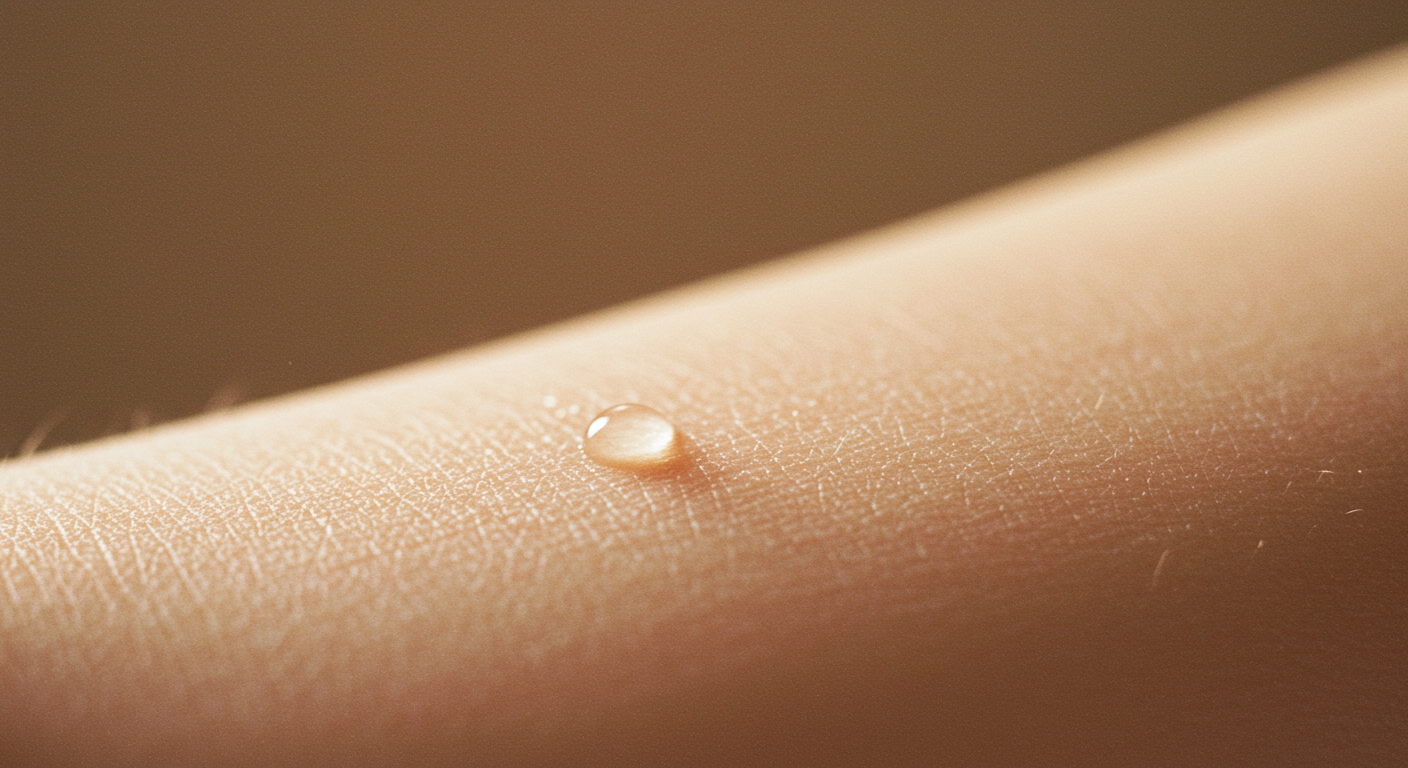
Skin isn’t just a passive canvas; it’s a dynamic, living organ. When you apply perfume, it doesn’t just sit on top. Instead, the molecules in the fragrance interact with various elements on your skin’s surface. These interactions, while small on the scale of things, can actually radically impact the way a perfume will smell to you or others. Essentially, skin chemistry is the biochemical makeup of your skin, which is unique to each individual. There are various factors at play, from pH to hormones and even diet.
pH Levels
pH is a scale that measures how acidic and basic (alkaline) something is. Normal skin pH is slightly acidic, ranging from 4.5 to 5.5, and variations in pH can influence how quickly perfume molecules evaporate or change their perceived scent.
A higher pH (more alkaline) can sometimes make citrus notes more prominent and sharper, while musks can smell “powdery” or soapy.
Contrarily, a lower pH can make floral notes smell sharper or make some sweet notes less pronounced.
Skin Temperature
When it’s warm, it evaporates quicker; when it’s cold, it evaporates more slowly. That’s also true for skin and perfumes. Warmer skin causes the perfume molecules to evaporate more quickly. As a result, it will make the initial projection (or sillage) stronger but potentially shorten the longevity. This is why applying perfume to pulse points (wrists, neck, and behind ears) works so well, since these areas are naturally warmer.
Sebum – Oil Production
Skin naturally produces oils (sebum), which can act as a base for the perfume.
Oily skin tends to “hold” fragrances better, making the perfume last longer and sometimes intensifying specific notes. However, very oily skin can sometimes distort delicate notes or make them smell heavier.
In contrast, perfumes tend to evaporate quickly on dry skin, leading to shorter longevity. Without a strong oily base, the fragrance molecules have less to “cling” to. That is often why, when looking at extending fragrance longevity, the common advice is to moisturize skin before applying perfume.
Hormonal Changes
Let’s not underestimate the impact of hormones. Fluctuations due to menstrual cycles, pregnancy, or even stress can subtly alter your skin’s pH, temperature, and oil production. The factors lead to temporary changes in how your perfume smells or how you perceive it.
Diet and Lifestyle
Yes, what you eat can influence your body odor (although minor) and, by extension, how certain notes interact with your skin. Spicy foods, drinks, or some medications can occasionally create subtle shifts.
How Does Skin Chemistry Alter Perfumes?
While everyone’s skin chemistry is unique, there are common ways it can alter a fragrance. Especially when comparing common notes from person to person. You’ve probably previously smelled a perfume on a friend and had a very different reaction to it. Or a perfume known to be long-lasting doesn’t last long on you.
For example, gourmand or very sweet fragrances can turn unexpectedly tangy or metallic on certain skin types. Fresh citrusy notes can turn soapy and powdery.
Delicate florals might disappear quickly on dry skin. In contrast, on oily skin, they could become surprisingly potent or even indolic (a rich, sometimes animalic floral scent).
Base notes like musks, ambers, and woods tend to be long-lasting. On some skin types, they can become very dominant, overshadowing the lighter top and heart notes. Some people report that their skin “eats” perfume, making even long-lasting fragrances vanish quickly. This is often due to very dry skin.

How to Pick Perfumes Based on Skin Scent
Understanding your skin chemistry can help you make smarter perfume choices. Not all perfumes will work on your skin, and knowing this is helpful.
- Always test on skin: Never judge a perfume solely on a test strip or from someone else. Always spray it directly onto your skin (wrist, inner elbow) and wear it for a few hours to see how the perfume evolves.
- Moisturize: If you have dry skin, hydrating it before applying perfume creates a better base for the fragrance to cling to. This will significantly improve longevity. Opt for an unscented lotion. But if you enjoy layering, use body products from the same fragrance line (body wash, lotion) to build a foundation that supports the perfume or use one that complements your chosen fragrance.
- Apply to Pulse Points: The warmth from your pulse points helps diffuse the scent, but also be mindful that this warmth accelerates evaporation. For lighter fragrances, or if you have oily skin, you might apply it to less warm areas.
- Consider Hair and Clothes: If your skin tends to “eat” perfume, try spraying a light mist on your hair (which holds scent well) or clothes (from a distance to avoid staining, especially on delicate fabrics). Caution: Always patch test on fabric first.
- Perfume Evolves: Remember that a perfume is designed to evolve. Appreciate the journey it takes on your skin, even if it’s different from the initial spritz. Sometimes, the dry-down is where the true magic happens.
- Don’t Force It: If a perfume doesn’t work on your skin after multiple tries, it’s okay to let it go. There are thousands of fragrances out there waiting to find their perfect match with your unique chemistry.
What’s your experience? Have you noticed how your skin changes a perfume? And if yes, which perfumes have you tried that have radically changed?
In my case, my mother and I have always shared perfumes since I was young, and we soon noticed how different it smelled on us. She was the first person I knew to wear Baccarat Rouge 540 before it became an internet phenomenon. On her, it smelled woody, ambery, warm, and spicy with a balanced sweetness. On me? Overly sweet, and almost metallic. Glossier You smell powdery and like clean skin on my friend. On me? Very peppery.
You might like: What Are Skin Scent Perfumes?
